Four Productions, Two Cities, One Thursday: How We Staff a Busy Production Day
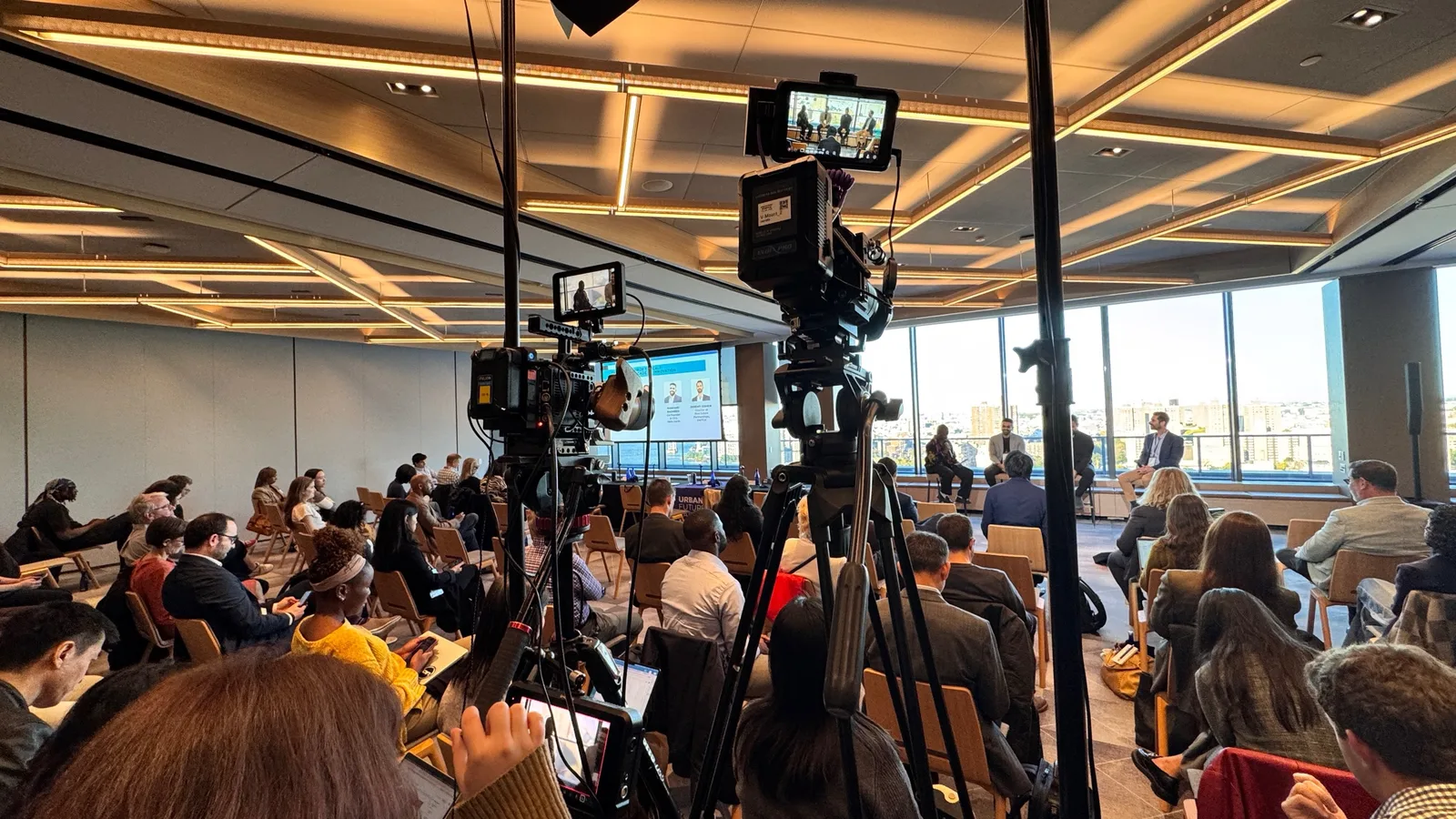
Photo by Transcendent Enterprise
Most of our days are one shoot. Some days are two. Thursday, October 22, 2026 was four productions in two cities, running at the same time. New York had three. Los Angeles had one. By the end of the day we had 16 cameras rolling across those shoots and 11 people on the crew sheet.
I'm writing this down because clients ask us a version of the same question all the time. If you're busy, does my shoot get the B team? On a day like this one, the answer comes down to how the day was built weeks before anyone loaded a car.
Here's what was on our production schedule for October 22
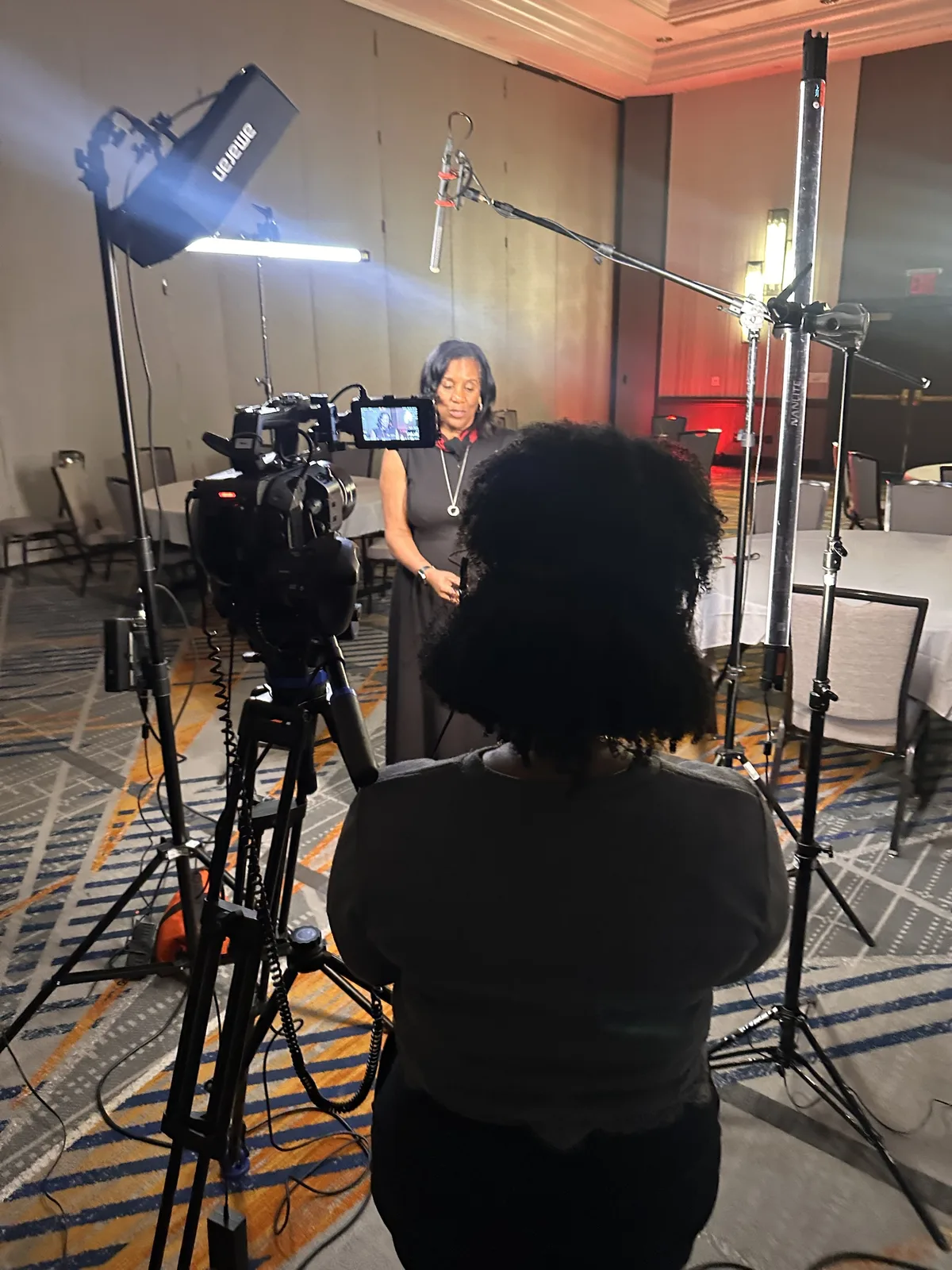
The National Urban League is a long-time client, and this was the first of two shoot days for a promotional video about one of its leadership centers. The plan called for interviews with six to eight people about the center's impact and where it's going next. The crew arrived at 7 AM to set up, with three cameras: a Sony FX3, a Sony FS7 and a DJI Osmo for movement.
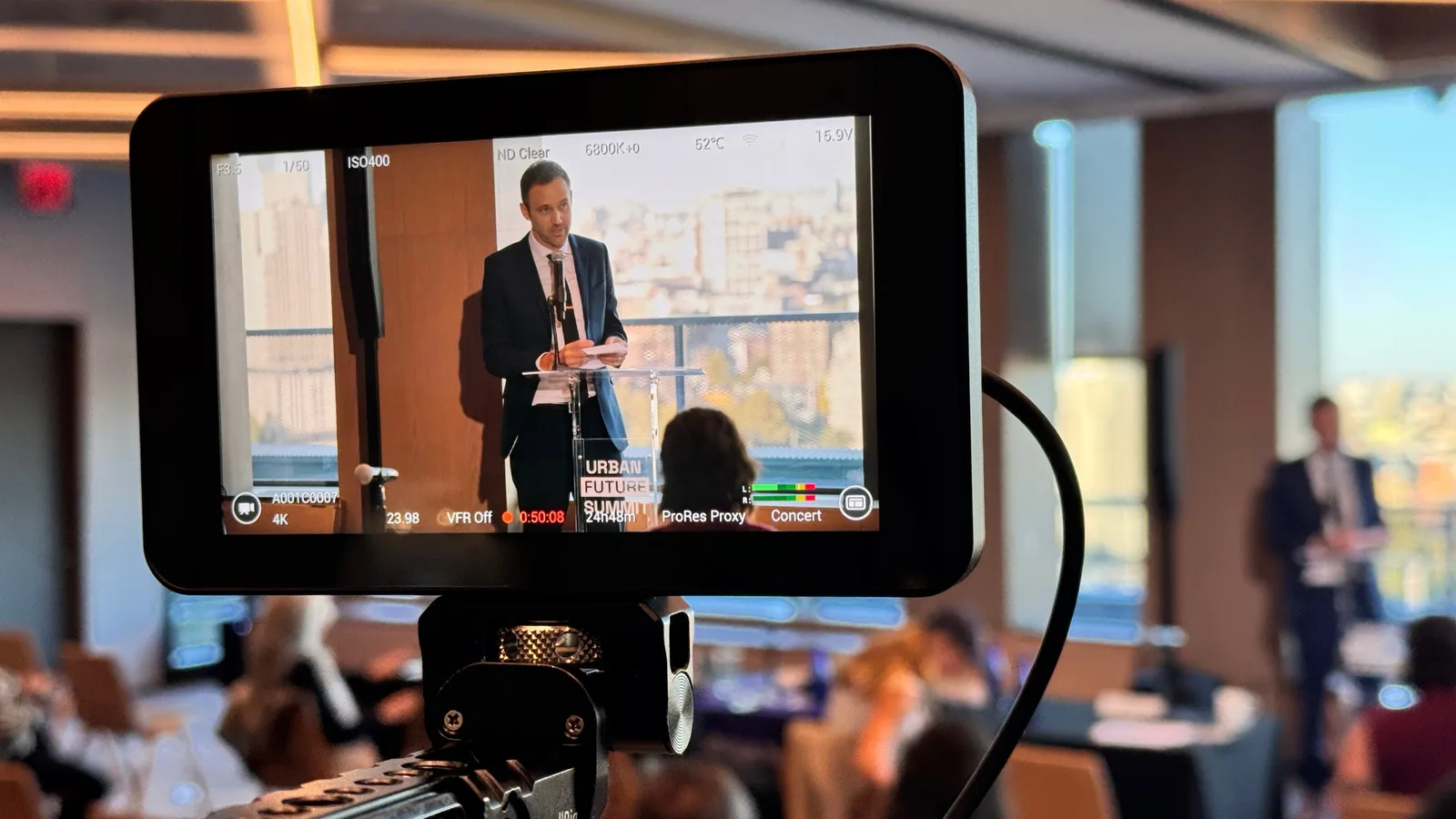
Urban Future Lab held its Urban Future Summit at Dock 72 in the Brooklyn Navy Yard. This year was the summit's tenth, and that anniversary is the angle of the recap. Crew call was 11:00 for a 1:00 to 6:00 PM program. We ran five cameras: two in the main room for a wide and a close-up on every speaker, a stationary interview set outside running before, during and after the program, and a roaming b-roll camera. That's three Z Cams, a Sony FX30 and a Sony FX3.
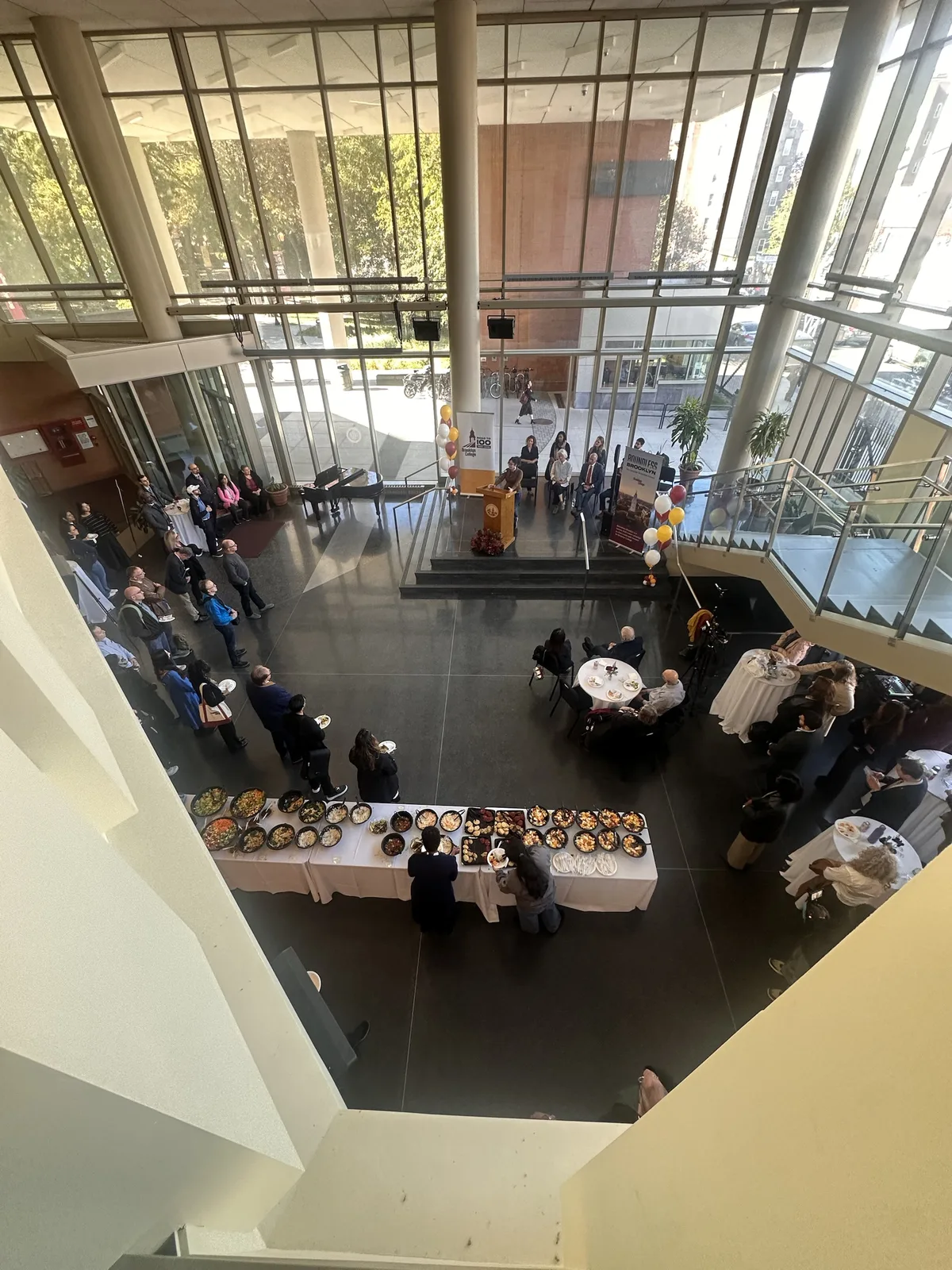
At Brooklyn College, call was 9:00 AM for a full campus day. A ribbon cutting on the new quad at 11:00 with the President and guests, then the Boundless Brooklyn announcement in the Claire Tow atrium at 2:00. That announcement covered the Interboro Express line between Queens and Brooklyn and the kickoff of the college's Road to 100 campaign. We brought three cameras there: a Sony FX9, a Sony A7S III and an Osmo. We filmed in the Claire Tow Theater in September, so we already knew the building, the parking and how the house audio works.
In Los Angeles, we crewed BeautyMatter's NEXT50 conference in San Pedro with five cameras. One on-site lead from our side, plus three local hires. The day started with a 7:30 AM arrival, Pacific time, which is 10:30 in New York, while our three East Coast shoots were already rolling.
How we handled traffic delays on a four-shoot production day
The day was a challenge. There was a bad accident near the George Washington Bridge, terrible delays getting around it, and construction on a lot of the routes we needed. So we made a lot of plan Bs and plan Cs as the day went on.
That's where more than 20 years in this business shows up. You don't panic. You adjust, and you still deliver. Traffic and emergencies are real, but they're never an excuse a client should have to hear from us.
The team was very professional. They adjusted and pivoted all day, and I believe the clients didn't notice anything. We caught some good stuff, and we learned a lot.
How we staff four video shoots on the same day
Every shoot got its own run of show, its own camera package and one person responsible for it on site.
The work happens before the day. Our executive producer, Corinthia Paul, built each shoot in Basecamp with the call time, address, crew, shot plan and reference videos in one place. Freelance agreements were signed ahead of time. Certificates of insurance were pulled two days out, because a venue that hasn't received the COI is a venue where the crew waits in the lobby.
Camera counts matter too. On paper the day was 16 cameras. If you only count the cinema and mirrorless bodies and leave out the two Osmos, it's 14. I'd rather tell you the real number than the bigger one. What matters more is that each shoot had the right camera package for its job. An interview-driven promo, a fast summit with five angles and a campus day that moves from outdoor to indoor all need different setups.
Audio is where a busy day can quietly go wrong. At events we tap the house board and record our own backup, so if the venue feed drops, the speaker is still there in the edit.
Why we hire local crew in Los Angeles instead of flying everyone
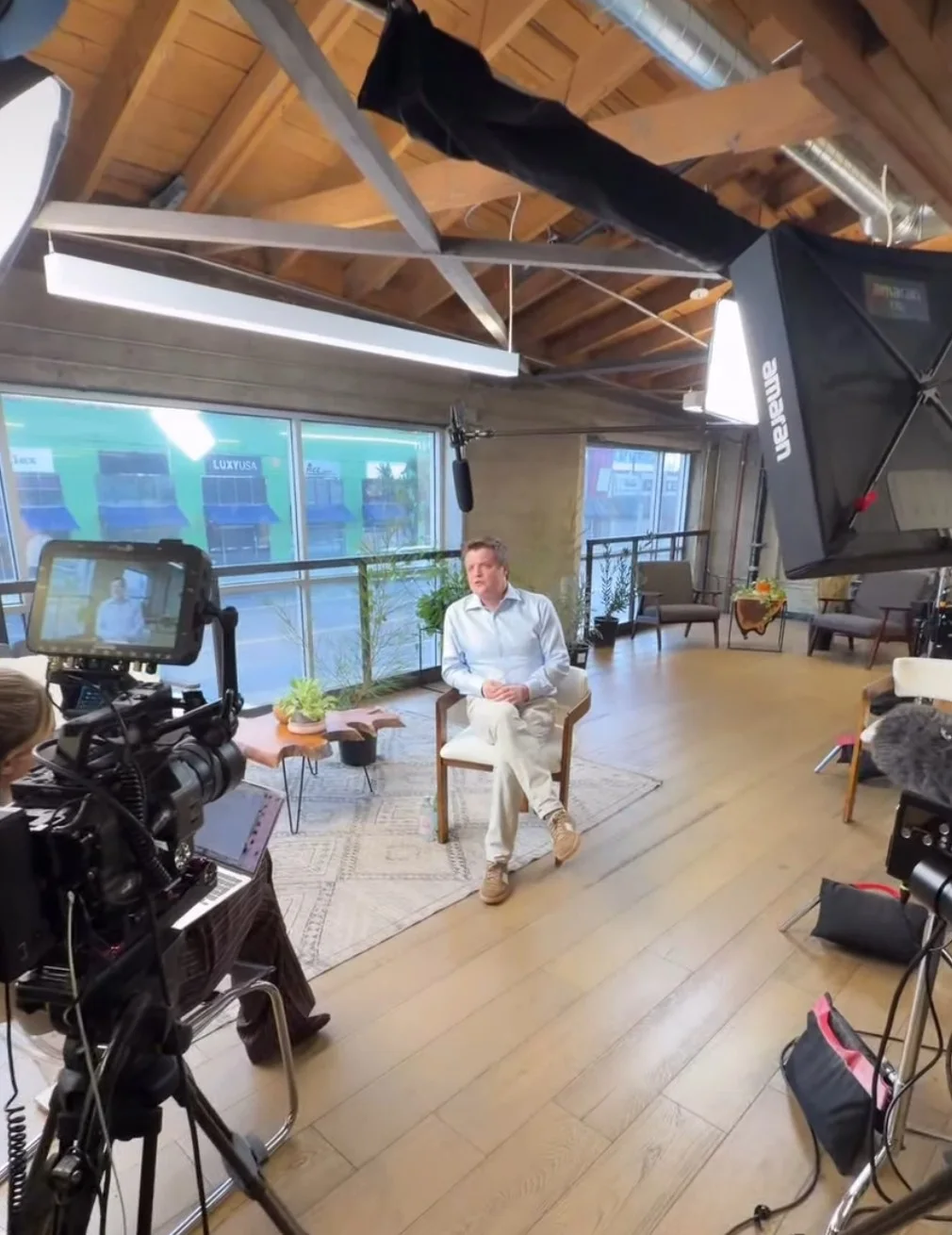
For the LA conference we sent one lead and hired three people in Los Angeles. Flying a full New York crew across the country for a one-day conference adds airfare, hotels, baggage and a travel day on both ends, and the client ends up paying for all of it.
Local hiring only works if you vet people before the day, not on the morning of. Three days out, Corinthia and I got on a production call with the local camera operator. We went through the camera body, lenses, tripods, how much recording media he'd bring for long sessions, the picture profile so his footage matches ours, lighting and how audio would come off the house board. After that call he got a written agreement, the run of show, the address and access to the same Basecamp project as everyone else.
That's the model we use when we travel. Someone on site who knows our standards and answers to us, and local people who know the city, vetted and briefed before they show up.
What a busy production day means if you're booking us
A full calendar shouldn't mean a thin crew for you. If your date lands on a day like October 22, your shoot still gets its own run of show, its own gear and someone on site who owns it, planned in advance.
It also says something about timing. The reason a four-shoot day worked is that every one of those shoots was booked and built ahead of time. If you know your date, tell us early, even before the details are set.
Everything worked out great, and we came out of it with lessons we'll use the next time the calendar looks like this.
Clients ask us these questions about multi-shoot days and travel
Can you film more than one event on the same day?
Yes. On October 22, 2026 we ran four productions at once in New York and Los Angeles. Each shoot gets its own run of show, camera package and someone on site responsible for it.
Do you fly your crew or hire locally when you film outside New York?
It depends on the job. For multi-day or story-heavy work we usually bring our own team. For a one-day event far away, we often send one lead and hire local crew we've vetted on a call and put under contract before the shoot.
How do you keep footage consistent when different camera operators shoot it?
We agree on cameras, picture profile, frame rate and audio plan before the day, and every crew member works from the same run of show. That way footage from different shoots cuts together.
How far ahead should we book a video crew in New York?
As soon as you have a date. Busy days get planned weeks ahead, so the earlier we know, the better the crew and gear match your shoot.